
The Business School of the Future Needs a Strong University by Its Side
By José M. Martínez-Sierra
For much of the twentieth century, business schools emerged as symbols of prestige. An MBA or an executive program was often seen as the fastest passport to success—sometimes even eclipsing the universities from which they originated. The Wharton School, Harvard Business School, or INSEAD built reputations that transcended their parent institutions, reflecting a time when the professionalisation of management was the great novelty that markets were demanding.
But the present is different. The pace of change is unprecedented. Technology, digitalisation, and artificial intelligence are transforming the way knowledge is produced and applied. At the same time, climate change, global inequality, and geopolitical tensions demand solutions that cut across disciplines.
Business education can no longer thrive in isolation. To remain relevant, it must be nourished by science, ethics and social knowledge. It needs the legitimacy and intellectual depth that only strong universities can provide. Universities generate the knowledge verticals—data science, biotechnology, law, and humanities—that give management education its true value. They are engines of interdisciplinarity, magnets for global academic talent, and guarantors of institutional sustainability. Without this foundation, business schools risk narrowing their vision and losing their public mission.
By contrast, consultancies or independent schools created without the backing of a strong university inevitably face structural limitations. Their contributions may be valuable, but they remain partial:
-
Without research, teaching risks becoming trend-driven.
-
Without academic validation, it lacks legitimacy.
-
Without multiple disciplines, knowledge is reduced to short-term business logic.
-
Without a sense of public responsibility, education becomes just another product, instead of a transformative social good.
The challenges ahead demand science-based, long-term knowledge. They cannot be met through improvisation.
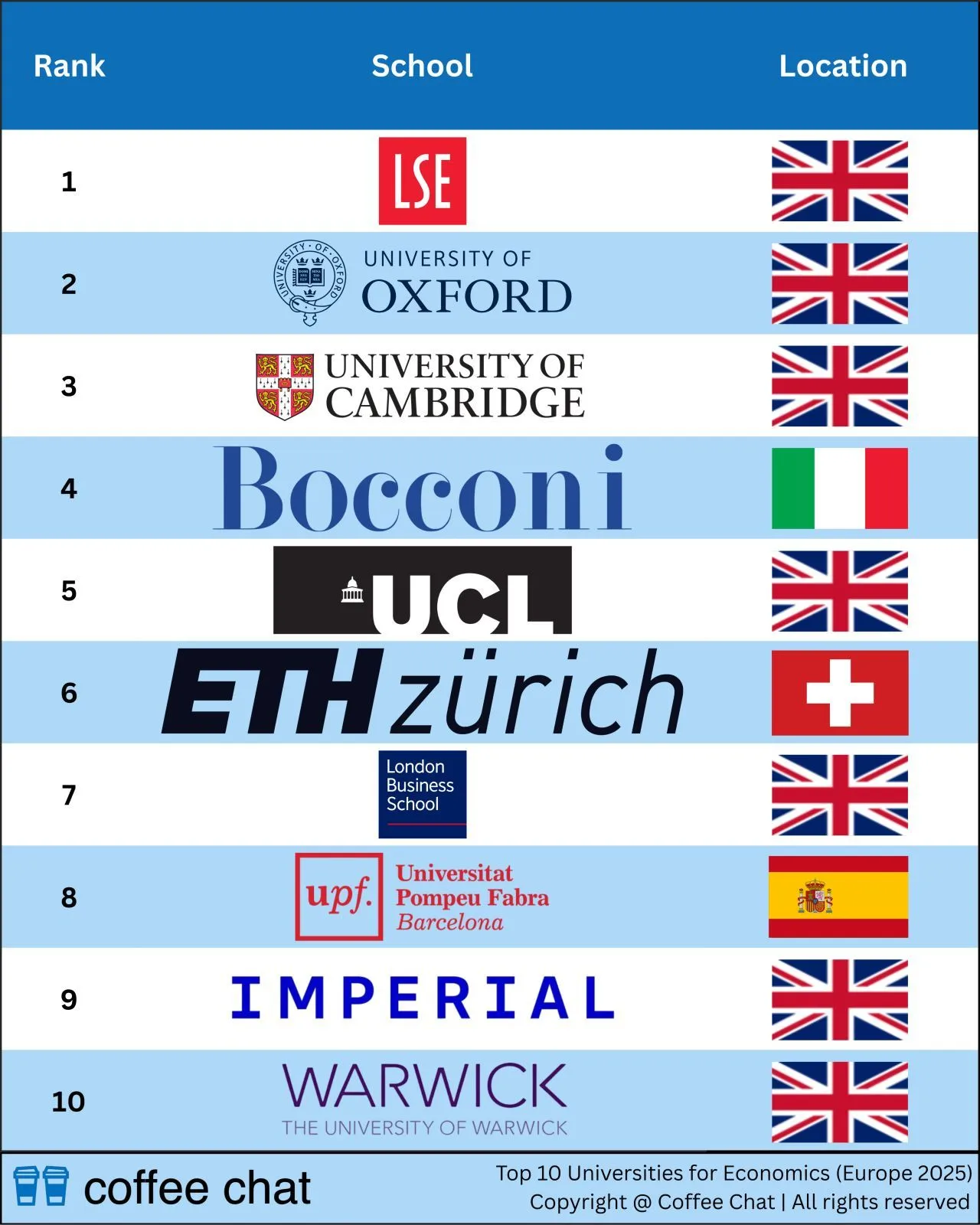
That is why the recent recognition of Universitat Pompeu Fabra – Barcelona and its Department of Economics and Business—ranked #8 among a select group of ten leading global universities in economics—is more than just an accolade. It is a signal. On that list, alongside Oxford, Cambridge, LSE, Bocconi, ETH Zürich and UCL, only two institutions are not centuries old: the University of Warwick and us.
With just 35 years of history, UPF has achieved in one generation what others have taken centuries to build. Excellence is never improvised—it is the result of rigor, intensity, and a clear public mission.
At UPF Barcelona School of Management, we are proud to stand on this foundation. Our mission is to translate the strength of a world-class university into management education that defines careers and shapes societies.
We may be young, but our impact is already global.